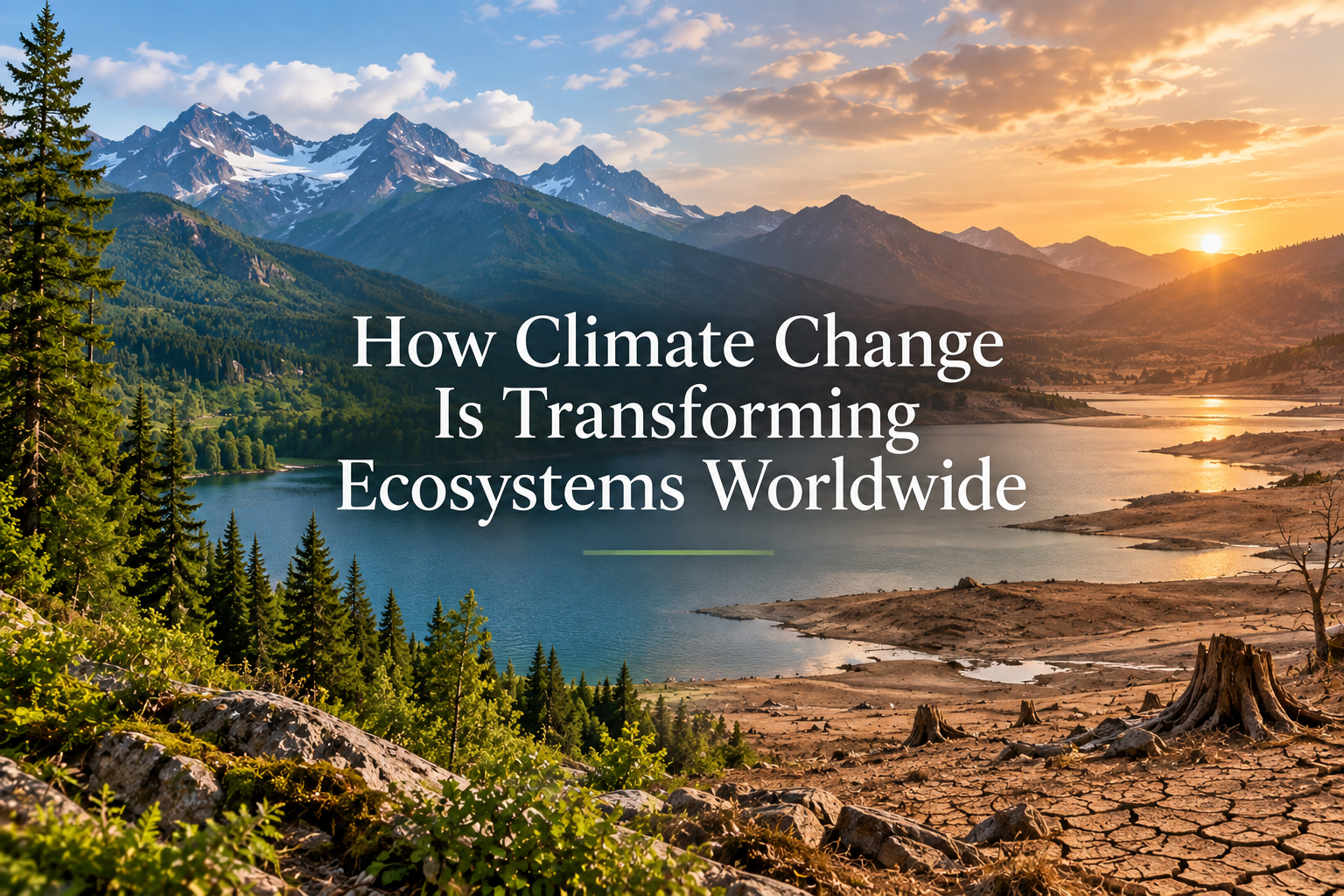
Climate change is often described through numbers: rising global temperatures, higher sea levels or increasing concentrations of carbon dioxide in the atmosphere. But in nature, climate change looks very different. It can mean a flower opening weeks earlier than it once did, a species appearing somewhere it has never lived before or a forest struggling to recover after years of drought.
Ecosystems are built on relationships. Plants, animals, fungi, microorganisms, water, soil and climate all influence one another. When temperature and rainfall patterns change, these relationships can change with them. And that transformation is already happening across the planet.
Ecosystems Are Shifting

For thousands of years, climate has helped determine where different ecosystems can exist. Tropical rainforests thrive under very different conditions from alpine meadows, tundra or Mediterranean shrublands. As temperatures rise, those climatic boundaries begin to move. Many species are already shifting their ranges toward cooler areas. Depending on their location, this can mean moving toward the poles, into deeper water or higher up mountains. But ecosystems do not simply pick themselves up and move together.
Some species can disperse relatively quickly, while others cannot. A mobile animal may be able to follow suitable temperatures into a new region, while a slow-growing plant species may take generations to expand its range. Mountains, cities, agricultural land and fragmented habitats can create additional barriers. As a result, ecological communities can gradually be rearranged. Species that have interacted for thousands of years may become separated, while entirely new combinations of species begin to share the same habitat. In some places, climate change may eventually alter the ecosystem itself rather than simply changing which individual species live there.
The Rhythm of Nature Is Changing
Climate does not only influence where species live. It also influences when things happen. Temperature and seasonal weather patterns act as environmental signals for countless biological processes. Plants respond to them when producing leaves and flowers, insects use them during development and animals rely on seasonal cues for migration, breeding and hibernation. As the climate changes, these natural calendars are changing too. Spring events can occur earlier, growing seasons can become longer and migration or breeding periods can shift. The problem is that not every species responds at exactly the same rate.
Imagine a plant beginning to flower earlier because of warmer spring temperatures. Its pollinator may respond to a different environmental signal and still emerge at roughly the same time as before. Even if both species survive individually, the timing of their interaction may no longer match as closely. Similar mismatches can occur between predators and prey, herbivores and plants or migrating animals and their seasonal food sources. A shift of only a few days or weeks can therefore travel surprisingly far through a food web.
Forests, Grasslands and Freshwater Ecosystems Under Pressure
Terrestrial ecosystems are facing several climate-related pressures at once. Higher temperatures can increase evaporation and intensify drought. Changing rainfall patterns can leave some regions considerably drier while increasing heavy rainfall and flooding elsewhere. Prolonged heat and drought can weaken vegetation, reduce plant growth and make forests more vulnerable to fires, pests and disease.
Wildfires are themselves natural components of some ecosystems. But changes in their frequency, intensity or season can exceed the conditions to which local species are adapted.
Freshwater ecosystems are affected as well. Rivers, lakes and wetlands depend heavily on temperature, rainfall, snowmelt and seasonal water availability. Warmer water holds less dissolved oxygen, while drought can reduce water levels or disconnect habitats that were previously linked. Climate stress can also interact with existing pressures such as habitat destruction, pollution and invasive species. An ecosystem already under pressure often has fewer opportunities to adapt when its climate changes.
The IPCC documents observed climate-related changes across terrestrial and freshwater ecosystems, including shifts in species distributions, seasonal biological events and ecosystem structure.
Oceans Are Changing Too
Climate change does not stop at the coastline but moves further on in the oceans.They absorb enormous amounts of excess heat from the climate system, and rising ocean temperatures are already altering marine environments. Marine heatwaves can expose organisms to unusually high temperatures for days, weeks or even months.
Coral reefs are among the most visible examples. When corals experience prolonged heat stress, they can expel the algae living within their tissues, causing coral bleaching.

Severe or repeated bleaching events can lead to widespread coral mortality and transform the ecosystems that depend on reefs for food, shelter and breeding grounds. Marine species are also shifting their geographic ranges as ocean temperatures change. Fish and other organisms may move toward cooler waters, potentially altering predator-prey relationships and the composition of marine communities.
At the same time, increasing atmospheric carbon dioxide is changing ocean chemistry. As seawater absorbs CO₂, it becomes more acidic. This can make it harder for some organisms, including corals and shell-forming species, to build and maintain calcium carbonate structures. The IPCC’s assessment of ocean and coastal ecosystems shows how ocean warming, acidification, sea-level rise and other climate-related changes are already affecting marine biodiversity and ecosystem functioning.
Cities Are Becoming Ecosystems of Their Own
Cities may look very different from forests or wetlands, but they are ecosystems too. Plants grow between buildings, insects pollinate urban flowers, birds nest on rooftops and countless organisms inhabit parks, gardens, rivers, soils and even cracks in pavement. Climate change adds another layer of pressure to these already highly modified environments.
Urban areas often become considerably warmer than their surroundings because buildings and paved surfaces absorb and retain heat. During increasingly frequent periods of extreme heat, this can create difficult conditions for both people and urban wildlife. Habitats are also highly fragmented. A species trying to move in response to changing temperatures may encounter roads, buildings and large areas with little vegetation. But cities also demonstrate how ecological design can make environments more resilient.
Trees and other plants provide shade, cool their surroundings through evapotranspiration and create habitat within otherwise heavily built-up landscapes. I explored this in more detail in How Plants Help Cool Our Cities, including the different ways urban vegetation can reduce heat. Protecting and expanding green spaces will not stop global climate change, but it can make urban ecosystems better equipped to cope with some of its consequences.
When Ecosystems Change, the Effects Reach Us Too

Humans are not separate from these ecological transformations. Healthy ecosystems provide services that societies depend on every day. They pollinate crops, regulate water, protect soils, store carbon, support fisheries and help buffer coastlines against storms and erosion. When ecosystems become less stable, some of these functions can weaken.
Changes in rainfall, temperature and pollinator activity can influence agriculture. Shifting marine populations can affect fisheries.
The degradation of forests, wetlands and soils can reduce natural carbon storage, while the loss of coastal ecosystems can leave communities more exposed to extreme weather. This also creates an important feedback. Healthy, diverse ecosystems generally have more ways to respond to disturbance. Protecting biodiversity, restoring degraded habitats and reconnecting fragmented landscapes can give species more opportunities to adapt or move as conditions change. But there are limits to adaptation. If environmental conditions change too quickly or too dramatically, some species and ecosystems will not be able to keep pace.
Climate change is therefore much more than a gradual increase in global temperature. It is changing seasons, shifting habitats, rearranging ecological communities and altering relationships that developed over thousands or even millions of years. The transformation of ecosystems is already underway and understanding those changes makes one thing particularly clear: when the climate changes, nature does not simply become warmer. The living world itself begins to reorganize.