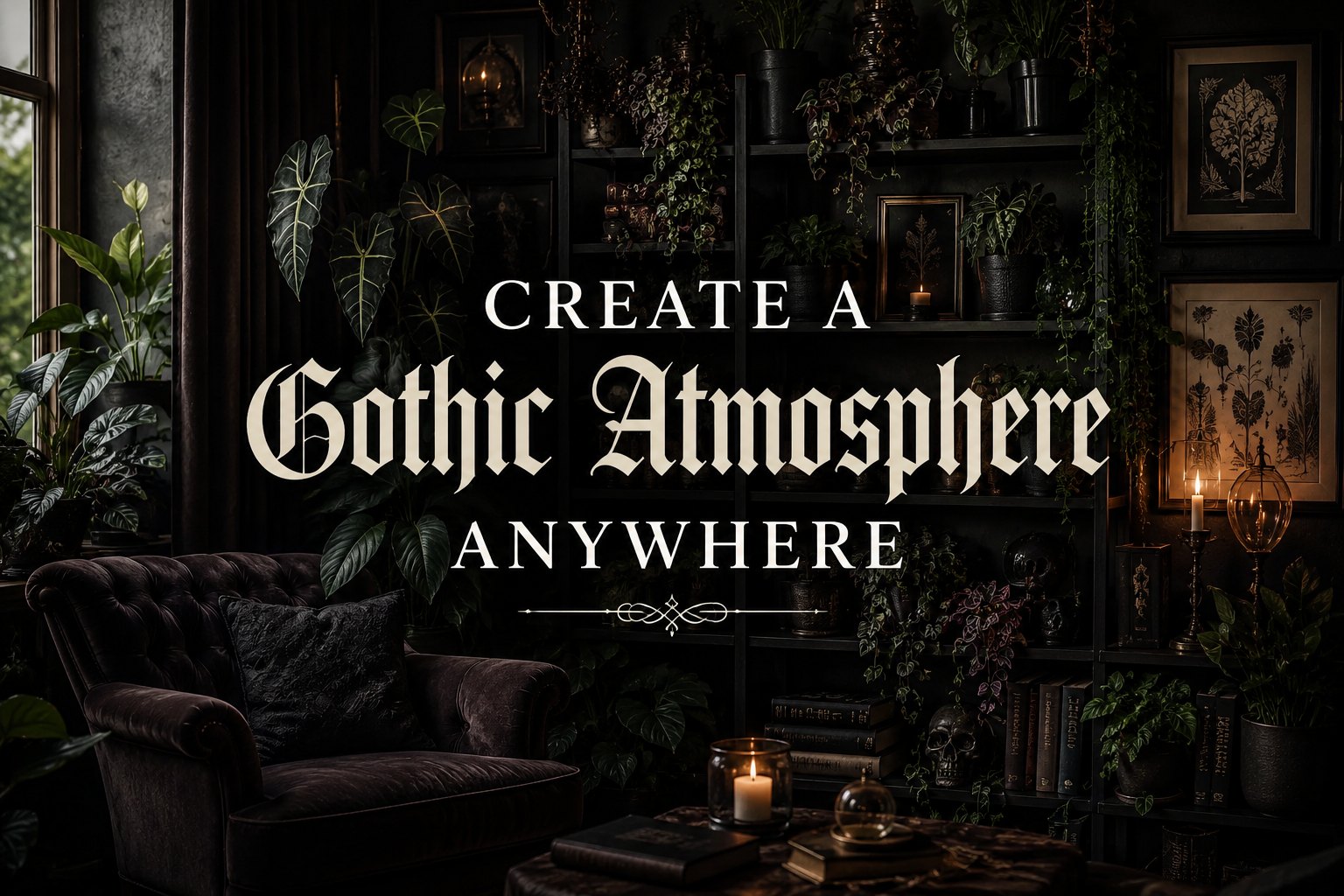
Title image generated with AI
Affiliate disclosure: This post contains affiliate links. If you make a purchase through one of these links, I may earn a commission at no additional cost to you.
Many people love the mysterious beauty of gothic gardens filled with dark flowers, dramatic foliage, and unusual plants. Unfortunately, not everyone has the space for one. Whether you live in an apartment, rent your home, or simply don’t have access to a garden, creating a gothic plant aesthetic is still entirely possible.
In fact, some of the most beautiful gothic plant displays can be found indoors. With the right plants, carefully chosen containers, and a few atmospheric details, even a small corner of your home can feel like a Victorian conservatory, a forgotten library, or a secret botanical retreat.
What Makes a Plant Display Feel Gothic?
When people hear the phrase “gothic plants,” they often imagine black flowers and dark foliage. While these certainly play a role, the aesthetic goes much deeper than color alone.
A gothic plant display is usually defined by drama, contrast, and a sense of mystery. Large architectural leaves, unusual textures, and plants with almost prehistoric appearances often contribute just as much to the atmosphere as dark foliage does. The goal is not to create a collection that feels gloomy, but one that feels intriguing and slightly untamed.
Many gothic interiors also draw inspiration from Victorian botanical collections. During the nineteenth century, exotic plants were often displayed alongside antique books, glass cases, illustrations, and curiosities from around the world. Recreating a modern version of that atmosphere can be surprisingly effective, even in a small apartment.
Choosing Houseplants with Gothic Character

Image generated with AI
One of the biggest misconceptions is that every gothic plant needs to be black. In reality, some of the most striking plants combine dramatic shapes with rich greens, deep burgundies, silvery markings, or unusual textures.
Dark foliage plants are often a natural starting point. A Raven ZZ Plant, for example, develops leaves so dark they can appear almost black in certain lighting conditions. Purple Shamrock adds movement and rich color, while darker Begonia varieties bring intricate leaf patterns that look almost hand-painted.
However, shape can be just as important as color. Snake Plants create strong vertical lines that feel architectural and elegant. Alocasias add oversized foliage and dramatic silhouettes, while ferns introduce texture and a slightly wild appearance that softens the display without making it feel less atmospheric.
Trailing plants can also help create a more immersive look. Allowing vines to spill from shelves or plant stands adds movement and makes a collection feel established rather than newly assembled. String of Hearts and darker Tradescantia varieties work particularly well for this purpose.
Rather than buying dozens of plants at once, focus on selecting a few specimens with strong visual personalities. A small collection of carefully chosen plants often creates a greater impact than a room filled with random greenery.
Not Every Gothic Plant Needs Dark Leaves
Image generated with AI
One of my personal favourites is Colocasia esculenta ‘Pharaoh’s Mask’. While it doesn’t fit the traditional image of a gothic plant, it has a dramatic appearance that immediately draws attention.
The bright green leaves are covered in dark, raised veins that create an almost skeletal pattern across the surface. Combined with the plant’s bold shape and imposing size, the result feels exotic, unusual, and slightly otherworldly. It looks like something that belongs in an old glasshouse or a fantasy novel rather than a typical living room.

Plants like this demonstrate an important principle of gothic design: mystery is often more powerful than darkness. A plant doesn’t have to be black to feel dramatic. Sometimes unusual markings, exaggerated leaf shapes, or unexpected textures can create an even stronger atmosphere.
Other plants that follow a similar principle include Jewel Orchids, Begonia rex cultivars, and the extraordinary Bat Flower (Tacca chantrieri), which is perhaps one of the most gothic-looking plants in existence.
Containers Matter More Than You Think
When people try to create a particular plant aesthetic, they often focus entirely on the plants themselves and forget about the containers. Yet a beautiful plant in the wrong pot can completely change the mood of a display.
For a gothic-inspired space, matte black planters, aged terracotta, weathered stone finishes, and antique-style ceramics tend to work particularly well. These materials create a sense of age and permanence that complements the plants rather than competing with them.
Consistency is often more important than perfection. A collection of simple black containers can look far more elegant and atmospheric than a mix of brightly coloured pots that constantly draw attention away from the foliage. If you’re working with a limited budget, even using a consistent colour palette for your containers can make a surprising difference.
Start Small and Let It Grow

Image generated with AI
One of the best things about plant collecting is that it doesn’t need to happen all at once. Many beautiful collections develop gradually over months or even years. A single dramatic plant on a bookshelf can be the beginning of something much larger. As your collection grows, you’ll naturally discover which plants thrive in your home and which styles appeal to you most.
Trying to recreate an entire aesthetic overnight often leads to unnecessary purchases and disappointment. Instead, focus on choosing plants that genuinely fascinate you. Over time, you’ll build a collection that feels far more authentic than anything assembled from a shopping list.
And if your interests eventually expand beyond houseplants, be sure to read my article on Gothic Plants: 13 Dark & Mysterious Plants for a Moody Garden, where I explore outdoor species that bring the same mysterious atmosphere to gardens and larger spaces. For even more inspiration, the book The Goth Garden (paid link) is a wonderful resource filled with unusual species and ideas for creating dramatic plant displays.
Conclusion
You don’t need a garden to embrace a gothic plant aesthetic. With a handful of carefully chosen houseplants, thoughtfully selected containers, and a focus on atmosphere rather than quantity, even the smallest home can become a mysterious botanical retreat.
Whether you’re drawn to dark foliage, unusual textures, or dramatic architectural forms, the most important thing is to create a collection that reflects your own curiosity and style. Sometimes all it takes is a single extraordinary plant to begin transforming an ordinary room into something unforgettable.