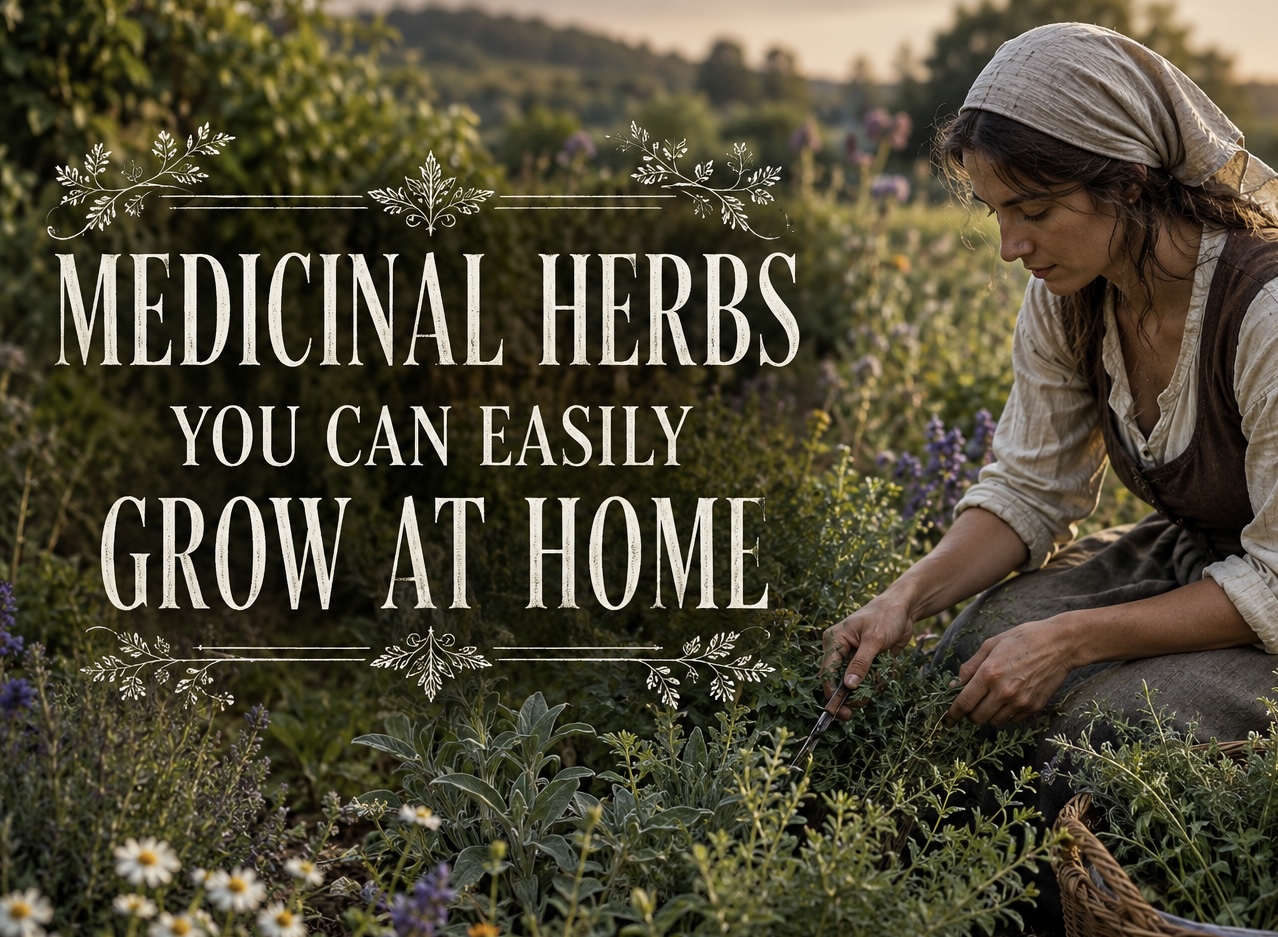
For thousands of years, humans relied on plants as their primary source of medicine. Long before pharmacies, laboratories, and synthetic drugs existed, people turned to herbs, roots, flowers, and tree bark to treat illnesses, relieve pain, and support healing.
Even today, many modern medicines trace their origins back to plants. While contemporary healthcare relies heavily on scientifically tested pharmaceuticals, medicinal plants continue to play an important role in herbal medicine, research, and everyday wellness practices around the world.
The good news is that you don’t need a large garden to grow many of these historically important plants. Several medicinal herbs are easy to cultivate at home, whether you have a backyard, a balcony, or just a few containers on a sunny windowsill.
The Botanical Origins of Medicine

The relationship between plants and medicine is as old as human civilization itself. Ancient Egyptians documented medicinal plants in texts such as the Ebers Papyrus over 3,500 years ago. In Ancient Greece, physicians like Hippocrates used herbal remedies extensively, while traditional medical systems in China, India, and Indigenous cultures around the world developed sophisticated knowledge of medicinal plants.
Many of the remedies used throughout history were based on careful observation and generations of accumulated experience. While not every traditional treatment has stood up to modern scientific testing, many have proven remarkably effective.
In fact, some of today’s most important medicines originated from plants. Aspirin was developed from compounds found in willow bark, while numerous modern drugs continue to be inspired by naturally occurring plant chemicals.
The study of medicinal plants has also been closely linked to the history of botany. Naturalists such as Maria Sibylla Merian helped expand scientific knowledge of plants and their ecological relationships, laying the groundwork for a deeper understanding of the natural world.
Medicinal Herbs You Can Grow at Home
Chamomile (Matricaria chamomilla)

Chamomile has been used medicinally for centuries and remains one of the most popular herbal remedies worldwide. Traditionally, chamomile tea has been consumed to support digestion, promote relaxation, and ease minor discomforts.
The plant contains several biologically active compounds, including flavonoids and essential oils that contribute to its characteristic aroma and traditional uses.
Chamomile is easy to grow from seed and thrives in sunny locations with well-draining soil. Its daisy-like flowers can be harvested and dried for later use.
Peppermint (Mentha × piperita)
Peppermint is famous for its cooling compound menthol, which contributes to the plant’s distinctive scent and flavor.
Historically, peppermint has been used to support digestion and relieve feelings of nausea. Today, peppermint remains one of the most widely studied medicinal herbs and is commonly consumed as tea or used in various herbal preparations.

Peppermint grows vigorously and is often best cultivated in containers, where its spreading roots can be kept under control.
Lemon Balm (Melissa officinalis)

A member of the mint family, lemon balm has a long history in European herbal medicine and was commonly grown in medieval monastery gardens.
Traditionally associated with relaxation and emotional well-being, lemon balm is valued for its pleasant citrus fragrance and ease of cultivation.
This hardy perennial grows well in containers and garden beds alike, making it an excellent addition to any medicinal herb collection.
Calendula (Calendula officinalis)
Calendula, also known as pot marigold, has been used in traditional herbal medicine for centuries.
Its bright orange flowers have historically been incorporated into salves, oils, and other preparations intended for skin care. The plant’s popularity stems from both its medicinal history and its ornamental beauty.

Calendula grows readily from seed and blooms throughout much of the growing season, providing a continuous supply of flowers for harvest.
Sage (Salvia officinalis)

The botanical name Salvia originates from the Latin word salvare, meaning “to heal” or “to save,” reflecting the plant’s long-standing medicinal reputation.
For centuries, sage has been associated with throat health and respiratory wellness. Its aromatic leaves contain a variety of biologically active compounds, including essential oils that have attracted scientific interest.
Sage prefers sunny locations and well-draining soil, making it particularly suitable for container gardening.
How Plants Create Medicinal Compounds
One of the most fascinating aspects of medicinal plants is that they did not evolve their beneficial compounds for humans.
Many of the chemicals we value in herbal medicine originally developed as part of plants’ own survival strategies. Essential oils, bitter compounds, flavonoids, and other secondary metabolites help plants defend themselves against herbivores, pathogens, and environmental stress.
These natural defense mechanisms are the reason many plants possess distinctive scents, flavors, and biological properties. If you’d like to learn more about this topic, you can read my article on Plant Defense Mechanisms.
Medicine and Poison: Two Sides of the Same Plant
The history of medicine reveals an important truth: the line between healing and toxicity is often surprisingly thin.
Many medicinal plants contain powerful bioactive compounds that can be beneficial in appropriate amounts but harmful when misused. Throughout history, physicians, herbalists, and scientists have learned that dosage plays a crucial role in determining whether a substance acts as a remedy or a poison.
Some of the most influential medicinal discoveries have originated from plants that are also considered toxic. This complex relationship between poison and medicine continues to shape modern pharmacology today.
If you’re interested in exploring the darker side of botanical history, Plants That Kill offers a fascinating look at poisonous plants and their surprising connections to medicine, folklore, and science.
Creating a Home Apothecary Garden
Growing medicinal herbs at home offers more than just convenient access to useful plants. It provides a direct connection to thousands of years of botanical knowledge and medicinal history.
Many medicinal herbs thrive in containers, making them suitable even for gardeners with limited space. Chamomile, lemon balm, sage, and peppermint can all be successfully grown on patios and balconies.
If you’re looking for additional herbs that perform well in small spaces, be sure to read my guide to the Best Herbs for Your Balcony.

By combining several medicinal species in a single planting area, you can create a small home apothecary garden that is both beautiful and historically meaningful.
Conclusion
Medicinal herbs represent one of humanity’s oldest connections to the natural world. Long before modern pharmaceuticals existed, plants formed the foundation of healthcare systems across countless cultures.
Today, these herbs continue to offer valuable insights into the relationship between botany, chemistry, and medicine. Growing them at home not only provides a rewarding gardening experience but also serves as a reminder of the remarkable role plants have played in shaping human history.
Whether you cultivate chamomile for its delicate flowers, peppermint for its refreshing aroma, or sage for its centuries-old reputation, every medicinal herb tells a story that stretches back through generations of botanical knowledge.