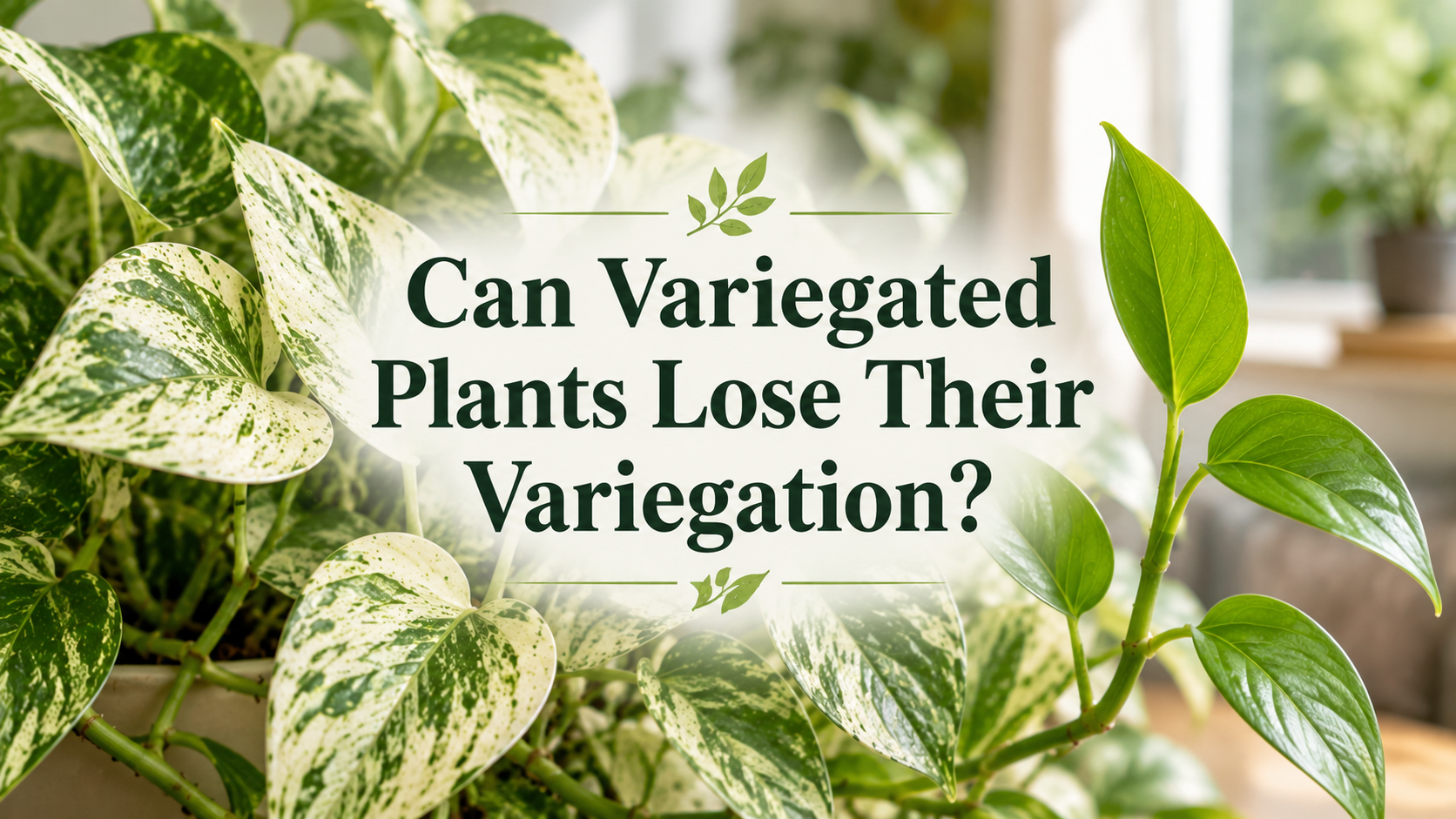
Variegated plants are among the most popular houseplants today. Their striking patterns of white, cream, yellow, pink, or silver make them stand out from ordinary green foliage. Whether you own a Monstera Albo, a Marble Queen Pothos, or a variegated Philodendron, those unique patterns are often the reason you chose the plant in the first place.
However, many plant owners notice something concerning over time: new leaves begin emerging greener than older ones, and the beautiful variegation slowly seems to disappear.
So, can variegated plants lose their variegation?
The short answer is yes. Many variegated plants can lose some or all of their variegation through a process known as reversion. In some cases, this change can be slowed down or even partially reversed. In others, it may become permanent.
Let’s explore why this happens and what you can do to keep your plant looking its best.
What Is Variegation?
Variegation refers to the appearance of different colors on a plant’s leaves. These color variations occur because certain parts of the leaf contain less chlorophyll than others.
Chlorophyll is the green pigment that plants use to absorb sunlight and produce energy through photosynthesis. When parts of a leaf lack chlorophyll, they appear white, cream, yellow, pink, or other colors instead of green.
If you’d like to learn more about the different types of variegation and how they develop, check out my article on Variegation in Plants.
Variegation can occur for several reasons, including genetic mutations, chimeric tissue, viral infections, or naturally occurring pigmentation. Some forms of variegation are highly stable, while others are much more prone to change over time.
Because green tissue produces more energy than non-green tissue, variegated plants often grow more slowly than their fully green counterparts. According to Missouri Botanical Garden – Chlorophyll and Photosynthesis, chlorophyll is essential for capturing light energy and driving photosynthesis, which helps explain why green tissue has a natural advantage over non-green tissue. This biological disadvantage plays an important role in why reversion occurs.
Why Do Variegated Plants Lose Their Variegation?
There is no single reason why variegation disappears. In most cases, a combination of genetics and environmental conditions is responsible.
Insufficient Light
One of the most common causes of reduced variegation is inadequate light. Since the white or cream portions of a leaf contain little or no chlorophyll, they contribute less to photosynthesis. When a plant receives too little light, it may compensate by producing more green tissue to maximize energy production. As a result, new leaves may emerge with less variegation than previous ones.
This doesn’t necessarily mean your plant is unhealthy. Instead, it is responding to its environment in a way that increases its chances of survival. Most variegated houseplants perform best in bright, indirect light. While lighting requirements vary between species, insufficient light is often the first factor to investigate when variegation begins to fade.
Natural Reversion
Some variegated plants are genetically unstable. In these plants, green cells often have a growth advantage over variegated cells because they can photosynthesize more efficiently. Over time, green growth may gradually outcompete variegated growth. This process is known as reversion.
According to the Royal Horticultural Society – Variegated Plants, green growth is often more vigorous because it contains more chlorophyll and can produce energy more efficiently. As a result, green shoots may gradually outcompete variegated growth over time.
Once a fully green stem develops, it frequently grows faster than the variegated portions of the plant. If left unchecked, the green growth may eventually dominate the entire plant. Species such as Monstera Albo and certain variegated Philodendrons are particularly known for their tendency to revert.
Stress and Growing Conditions
Environmental stress can also influence variegation.
Potential stress factors include:
- Sudden temperature changes
- Prolonged drought
- Overwatering
- Root damage
- Nutrient imbalances
While stress is usually not the primary cause of reversion, it can weaken the plant and affect the development of new leaves. Maintaining stable growing conditions helps support healthy growth and may improve the consistency of variegation.
What Does Reversion Look Like?

Reversion is not always obvious at first.
Common signs include:
- New leaves showing less variegation than older leaves
- White or cream sections becoming progressively smaller
- Leaves emerging almost entirely green
- Entire stems producing only green foliage
In some cases, only a small section of the plant reverts. In others, the change spreads gradually through multiple growth points. The earlier you notice these changes, the easier it is to manage them.
Can Variegation Return?
This depends on the cause of the variegation loss.
Sometimes, Yes
If reduced variegation is primarily caused by insufficient light, improving growing conditions may encourage future leaves to display stronger coloration. Moving the plant closer to a bright window or providing supplemental grow lights can sometimes improve the appearance of new growth. It is important to note that existing green leaves will usually remain green. Any improvement will typically appear only in future leaves.
Sometimes, No
If a stem has completely reverted to genetically stable green growth, the variegation is unlikely to return. In these cases, the cells responsible for producing variegated tissue may no longer be present in that particular growth point. This is why many collectors remove fully reverted stems before they become dominant.
How to Prevent Reversion
Although reversion cannot always be prevented, there are several steps that can reduce the risk.
Provide Bright Indirect Light
Most variegated houseplants thrive in bright, indirect light. Adequate light allows the plant to produce sufficient energy without relying as heavily on green tissue. Avoid placing variegated plants in dark corners where they may struggle to photosynthesize efficiently.
Remove Fully Green Shoots
If you notice a stem producing only green leaves, consider pruning it back to the last variegated node. This prevents vigorous green growth from overtaking the rest of the plant. However, pruning should be done carefully, especially on expensive or slow-growing specimens.
Monitor New Growth
Regularly inspecting new leaves can help you detect early signs of reversion. The sooner you identify a problem, the more options you have for managing it.
Choose Stable Varieties
Some variegated plants are naturally more stable than others. While no variegated plant is completely immune to change, certain cultivars maintain their patterns more consistently than highly unstable chimeric varieties. Researching a plant’s stability before purchasing can help set realistic expectations.
Plants That Commonly Revert
Many popular houseplants can experience reversion, including:
- Monstera Albo
- Monstera Adansonii Variegata
- Marble Queen Pothos
- Golden Pothos
- Variegated Philodendrons
- Variegated Syngoniums
- Variegated Hoyas
This does not mean these plants are difficult to grow. It simply means that maintaining strong variegation often requires attentive care and favorable growing conditions.
Frequently Asked Questions
Why is my variegated plant turning green?
The most common reasons are insufficient light and natural reversion. Many plants produce more green tissue when they need to increase photosynthesis.
Should I remove green leaves from a variegated plant?
Removing an occasional green leaf is usually unnecessary. However, fully green stems are often pruned to prevent them from overtaking variegated growth.
Can a reverted plant become variegated again?
Sometimes. If environmental conditions contributed to the loss of variegation, future leaves may develop stronger patterns. If the plant has genetically reverted, the change is often permanent.
Does fertilizer affect variegation?
Fertilizer does not directly create variegation. However, proper nutrition supports healthy growth, which may help the plant maintain its existing patterns.
Final Thoughts
Yes, variegated plants can lose their variegation, and the process is more common than many plant owners realize. In most cases, reduced light levels and natural reversion are the primary causes.
The good news is that early intervention can often help preserve beautiful patterns. Providing bright indirect light, monitoring new growth, and removing fully reverted stems can all improve your chances of maintaining a striking variegated plant.
While some degree of reversion is simply part of owning certain species, understanding why it happens allows you to respond before the plant becomes entirely green.